
Serving Temecula & Nearby Communities

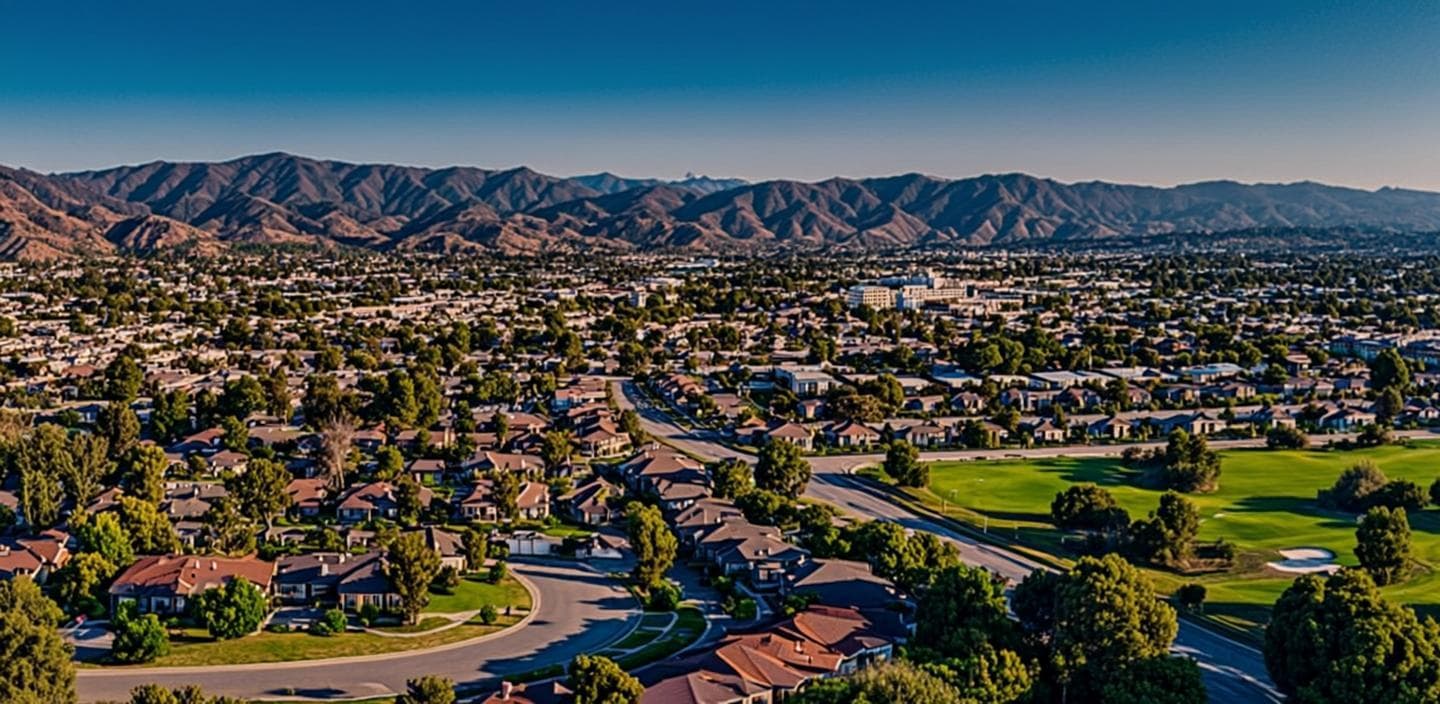
Hillside homes, tract rooftops and the freeway corridor of Murrieta, CA at golden dusk with dry green hills and the Temecula Valley beyond

Murrieta · Riverside County · 92562 & 92563

Leak Detection in Murrieta, CA

Murrieta is the largest city in Southwest Riverside County — and no single leak story fits it. From the 1980s first tracts and Bear Creek's golf-course streets to the hillside ranchettes of La Cresta and the master-planned east side, we locate slab, sewer, water line, irrigation and gas leaks across both ZIP codes — verified with evidence, documented in writing, same-day most days.

  • Both ZIPs — 92562 & 92563
  • Same-day slots most weekdays
  • Flat rate — no trip charge
  • Evidence-first written reports

Minutes From Both ZIPs

Our dispatch base at 33611 Blue Water Way sits just over the city's southern line, minutes from the I-15/I-215 interchange every Murrieta commute runs through. West-side hills, central tracts or east-side master plans — most appointments land same-day.

Fluent in Every Building Era

Murrieta's housing stock spans the 1880s townsite, the 1980s first suburban wave, the 1990s boom and the 2000s-plus master plans. Each era fails differently — we diagnose by decade, not by guesswork.

Hillside & Rural Property Specialists

La Cresta and Los Alamos Hills acreage means long buried runs, barn and trough plumbing, and leaks that surface as slope springs far from their source. Locating a leak on five acres is a different craft — one we practice daily.

Reports Both Districts Accept

Whether your water bill comes from EMWD or Rancho Water, our written locate report supports a leak-adjustment request, an insurance claim or an escrow decision — formatted the way adjusters and districts actually read.

Murrieta Leak Detection

Citywide Leak Detection for the Valley's Biggest City

Murrieta is the largest city in Southwest Riverside County — 110,000-plus neighbors spread across two ZIP codes, bordered by Temecula to the south and Wildomar and Menifee to the north, and stitched together by the I-15 and I-215 interchange that made it one of the Inland Empire's defining commuter cities. Juan Murrieta ran 7,000 sheep across this valley in the 1870s; the railroad mapped the townsite in 1884; the hot springs drew health seekers from 1902; and when I-15 arrived in the early 1980s, the suburban boom took off. That layered history matters to us for one practical reason: the pipes under this city are as layered as its story.

Unlike the single-neighborhood pages on this site, Murrieta needs a citywide answer. A 1984 slab in one of the first tracts off Murrieta Hot Springs Road, a guard-gated Bear Creek home along the Nicklaus fairways, a five-acre ranchette up Avenida La Cresta where the meter sits at the county road and the house sits a quarter-mile away, and a 2006 two-story in an east-side master plan are four different plumbing worlds — four different failure patterns, four different ways a leak announces itself. This page is our field guide to all of them.

We work Murrieta every single day from our dispatch base at 33611 Blue Water Way, just over the city's southern boundary. Every call wraps up the same way: the source found and proven — acoustically, thermally, by pressure test or tracer gas — then explained in plain English with a written report ready for your insurance adjuster, your water district's leak-adjustment process, or your escrow file. You approve any repair before we touch a pipe.

Local Building Science

Two ZIP Codes, Two Leak Profiles — One City

Most cities our size have a dominant housing decade. Murrieta has at least four, and the ZIP line roughly follows them. Understanding which era — and which water district — your street belongs to is the fastest shortcut to finding its leaks, so here is how we read the city map before we ever open a toolbox.

92562 · West & Central — The Original Valley

The townsite near Old Town, the first suburban tracts of the mid-1980s, the California Oaks and Murrieta Hot Springs corridors, and guard-gated Bear Creek all live here. Supply lines are aging copper at best — four decades of hard valley water have been thinning it from the inside — and a share of early-'80s homes across the Inland Empire were piped with gray polybutylene that is now well past its design life. Sewer laterals run beneath mature lots and legacy trees, which is why root-invaded laterals top the west-side call list.

92563 · East Side — The Growth Years

East of the freeway, the master plans of the late 1990s through the 2010s — Alta Murrieta, Spencer's Crossing and their neighbors — came of age as PEX home-run manifolds and CSST gas lines became the standard. The failure profile shifts accordingly: builder fittings reaching the twenty-year mark, slabs settling on expansive clay, HOA-maintained slope and parkway landscaping that leaks on common ground, and long yard-drain runs that move water where you can't see it.

The West Hills — Acreage Rules

La Cresta and Los Alamos Hills play by their own rulebook: meters at the county road, buried service lines hundreds of feet long, water troughs and barn plumbing branching off side taps, and a Rancho Water / EMWD patchwork across the canyon edges. Out here a leak can surface as a 'spring' on a slope two properties away from its source, and finding it is a correlation survey, not a wet-spot hunt.

Neighborhood Map Knowledge

Where Leaks Hide Across Murrieta

Ask a plumber where leaks hide and you'll hear about pipe materials. Ask us, and we'll take you street by street — because in a city this layered, the neighborhood tells you the suspect list before the truck door opens. These six corners of Murrieta account for most of our call-outs.

Old Town & the Railroad Townsite

Murrieta's oldest streets near the creek hold the city's oldest water: legacy service lines, decades of repairs layered over original runs, and buildings that have outlived every fitting installed in them. Age alone doesn't condemn pipe, but it changes what we check first — and how carefully we verify before anyone opens a century-old wall.

The 1980s First Tracts

The subdivisions that boomed with I-15 are now about forty years old — right at the age where under-slab copper pinholes, failing angle stops and original water heaters converge. And if a home from that wave still runs gray polybutylene supply lines, the question isn't if it becomes a problem but when. Era fluency is the whole diagnosis here.

Bear Creek & the Golf-Course Streets

Roughly 620 homes wrapping a Nicklaus course, building from the mid-1980s onward — the irrigation laterals feeding fairway-adjacent yards are as old as the community, and hillside drainage crosses the same ground as the buried supplies. When a Bear Creek slope stays green in September, we've learned to separate course irrigation, yard systems and slope seeps before quoting anything.

The 1990s Boom Heartland

Alta Murrieta, California Oaks and the tracts that filled the valley's biggest growth decade are entering their thirties: copper at mid-life, first-generation PEX from the transition years, irrigation laterals installed with the original landscape still cycling. The classic bill creep here is gradual, which is exactly why it hides — the meter tells the story the yard never shows.

The Master-Planned East

The 2000s-and-newer plans east of the freeway pack two-story wet walls, HOA slope and parkway landscaping, and slab-on-grade construction onto expansive clay that moves with the seasons. The leak signs are subtler — a pressure fade upstairs, a baseboard stain with no obvious source — and verifying the moisture path before opening drywall is what keeps the repair to a single visit.

La Cresta & Los Alamos Hills

Out in the acreage, the buried service line can run hundreds of feet from county road to farmhouse, past troughs, barns and gate valves nobody has exercised in years. Leaks surface as damp slopes, wells that seem to underperform, or a Rancho Water bill that climbs with nothing visible anywhere. Correlation listening and tracer gas find the break without trenching the whole run.

What We Hear From Murrieta Neighbors

The Four Calls We Get Most Across Murrieta

From the flats to the hills, four scenarios keep our Murrieta calendar full. Each one points at a different part of the system — and each one deserves verification before demolition, not after. Any of these sound like your week?

The Hillside 'Spring' That Appeared Overnight

A ranchette owner in the hills notices a damp streak down a slope that has been dry for a decade. Nine times out of ten it isn't a spring — it's a pressurized line up-slope losing water underground and letting gravity deliver the evidence downhill. Correlation listening and tracer gas trace it back to the exact break before a single blade touches that hillside.

Underground Leak Detection — how we handle it

The Warm Tile in a Forty-Year Slab

A west-side tract home, original copper under the slab, one patch of flooring that's warm before the coffee's made. That's the textbook signature of a hot-water slab leak in the city's first suburban wave — and thermal imaging plus acoustic listening confirm the exact spot in minutes, so the repair is one access panel, not a floor.

Slab Leak Detection & Repair — how we handle it

The Bill That Climbed While the House Sat Empty

In a commuter city, the most damning evidence is a meter that spins on a weekday when nobody's home. If the bill climbs in steps while schedules haven't changed, we split irrigation from household supply at the meter, pressure-test the service line end to end, and put the waste on paper — often between the meter and the house, where it has been running all day, every day.

Main Water Line Leak Detection — how we handle it

The Guest-Bath Gurgle Under a Mature Tree

An established west-side lot with a fifty-year-old oak or pepper tree, a gurgle in the lowest bathroom, drains that slow a little more every season. Roots follow moisture into legacy lateral joints, and the backup cycle repeats until the line is camera-verified and hydrostatic-tested. You see the root intrusion on screen before anyone quotes a fix.

Sewer Line Leak Detection — how we handle it

How It Works

Your Murrieta Visit, Step by Step

No guesswork, no demolition-first thinking — and a schedule built around the fact that most of this city leaves for work before 7 a.m. Here's exactly what happens between your call and the written report.

  1. Call and Reach a Technician

    Your call is answered by a technician, not a script. Describe what you're seeing and we'll book the earliest slot — usually same-day for Murrieta addresses, with early-morning and late-afternoon windows popular here. Active leaks jump the queue around the clock.

  2. Walk the Property Together

    We confirm the symptoms, then walk the property with you — meter, driveway edge, valve boxes, equipment pad, the slope, the far fence line. In a city of four housing eras, that walk tells us which decade's failure pattern we're dealing with.

  3. Locate It, Prove It

    Acoustic listening, thermal imaging, meter isolation, pressure tests or tracer gas — whichever method the era and the layout call for — until the leak is found and verified with minimal or no digging.

  4. Report in Hand, Options on the Table

    Findings in writing, the leak marked on-site, and flat-rate repair options you approve before any work starts. The report is built for its audience — insurer, water district, escrow officer or HOA manager.

Straight Pricing

What Leak Detection Costs in Murrieta

Murrieta addresses pay the same flat rates as the rest of the valley — the freeway miles never become a surcharge on your invoice. You'll have the number before we roll, and it won't move mid-job.

Detection Visit — House, Yard & Hills

$150–$450

Flat rate, quoted upfront

Most Murrieta homes land in this band: acoustic + thermal + pressure testing across the property, the leak located and verified, findings in writing. Hillside acreage with multiple suspect systems is quoted before work begins — and the fee is credited toward the repair when we perform it.

Repairing an Under-Slab Leak

≈$630–$4,400

National average ≈ $2,300

Published industry data puts most under-slab repairs in this range. Easy access lands at the lower end; deep runs under tile cost more — and on the city's 1980s slabs we plan the access around the original copper routing before quoting a number.

Yard, Sewer & Rural Lines

Quoted after locate

By scope, before any digging

From a single lateral spot-repair to a three-hundred-foot ranchette run or a root-invaded sewer beneath a mature lot — the leak is located first, then the repair is quoted flat before a shovel touches soil.

Two water districts, one paper trail

Depending on your street, your Murrieta water bill comes from Eastern Municipal Water District — or, up in the western hills around La Cresta and the De Luz edges, from Rancho California Water District. That matters after a leak: both districts have processes for adjusting a bill skewed by hidden water loss, and both start with documentation. Our locate report states what leaked, where, and how much was verified on-site — the exact evidence a leak-adjustment request or an insurance claim needs. And if the line turns out to feed an HOA's slope or common landscape, the report also states whose line it is, so the cost lands with the right party.

Get your flat-rate quote

The Murrieta Reality

The Commuter City Effect: Leaks Love an Empty House

Murrieta is, by census temperament, a bedroom community — tens of thousands of residents rolling down I-15 or up I-215 before sunrise and back after dark. That rhythm has a hidden plumbing cost: a leak that starts at 8:05 a.m. can run, unwatched, until 6:30 p.m. — ten hours of continuous waste inside walls, under slabs and along buried lines. Homes that sit empty all day don't just hide leaks; they incubate them. The damage we find in Murrieta is routinely worse per week of leakage than in towns where somebody is home to hear the hiss.

The good news is that the commute gives you a free diagnostic window. Read your meter on the way out; read it again at dinner. If it moved on a day nobody showered, ran laundry or watered — or if your district's usage portal shows a flat overnight baseline that never touches zero — something is running. Book the discovery before you leave: a morning appointment catches the meter mid-suspect, and our isolation tests split supply, irrigation and pool systems apart so the evidence points at one line, not a haystack.

Call Now — (951) 393-1867
  • The Two-Reading Meter Test

    Note the meter reading as you pull out in the morning and again when you're home. Any movement on a no-usage day is a leak until proven otherwise — and it's evidence we can start from before the truck even rolls.

  • The Overnight Baseline on the Portal

    EMWD and Rancho Water both surface hourly usage online. A sleeping household should flatline at night; a line that never reaches zero is quietly running somewhere — and the portal's history shows exactly when the pattern started.

  • Morning Slots Built for Commuters

    We book early windows deliberately: catch the leak's behavior before the house wakes up, verify it before you join the freeway, and come home to a written report instead of a mystery.

  • The 6 p.m. Escalation Rule

    Come home to a spreading stain, a spinning meter or the sound of water with everything off? Shut the main and call — active-leak calls jump the queue 24/7, and we're dispatching from just over the Temecula line, not across the county.

Proudly Local

Murrieta Coverage — And Every Corner of the Valley

Murrieta anchors the northern half of our coverage — both ZIPs, every housing era, from Old Town's oldest streets to the newest east-side plans and the ranchettes above them. One team covers all ten areas we serve, from Redhawk and Paloma del Sol across Wildomar, Menifee and out to Fallbrook, with the same equipment, the same flat rates and the same written-report standard.

Dispatching across Murrieta daily — both ZIPs, 92562 & 92563

Also serving: Paseo del Sol, Vail Ranch, Morgan Hill, Temecula Creek, Chardonnay Hills, Crowne Hill, Old Town Temecula, Temecula Wine Country, De Luz, La Cresta, Lake Elsinore, Canyon Lake, Temescal Valley and more. Not on the list? Call (951) 393-1867 — if you're nearby, we'll find a way to help.

Other Areas We Serve

Murrieta FAQs

Questions? Let's clear things up.

Straight answers about leak detection in Murrieta — both ZIP codes, 1980s-era plumbing, polybutylene, La Cresta acreage, Bear Creek golf-course slopes, the EMWD / Rancho Water split and commuter scheduling.

Have a different question?

Describe what you're noticing — a technician will walk you through it.

Ask Our Team

Every day, citywide. Our dispatch base at 33611 Blue Water Way sits just over the southern line, so central Murrieta and the east side are short freeway runs and the west side is a few minutes more. Both ZIPs get the same flat-rate leak detection pricing, quoted on the phone before we roll — and we never add a travel fee for the west hills or the acreage streets.

Murrieta's Citywide Leak Specialists

Leaking in Murrieta? We're Minutes From Both ZIPs.

Skip the call-center roulette. A technician will quote your flat rate, lock in the earliest slot — early windows for commuters included — and locate, verify and document the leak before you decide on any repair. That's how we've earned Murrieta's trust, ZIP code by ZIP code.

Call Now(951) 393-1867