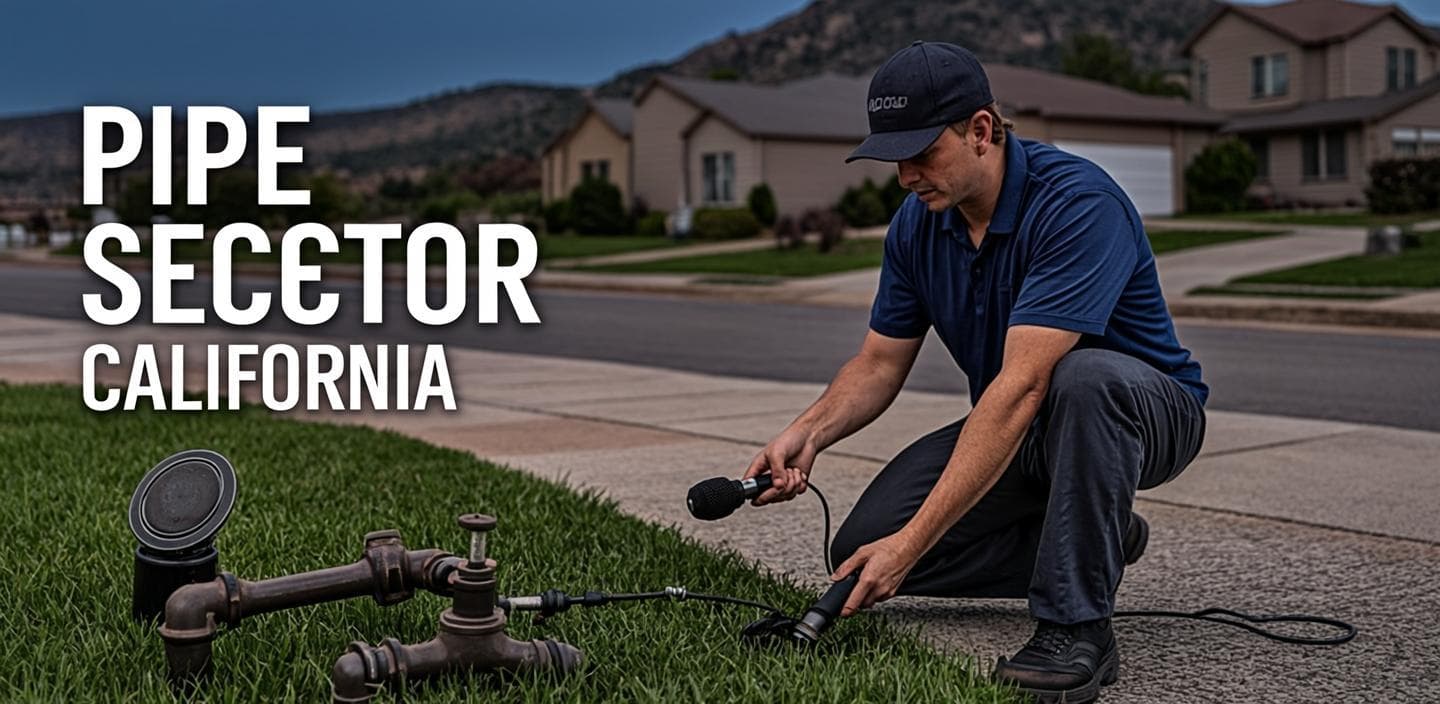
The meter spins, but every faucet in the house is off — the classic sign of a main water line leak between the street and your home. We pressure-test and trace the full service line end to end, pinpoint the exact break, and hand you a written report with flat-rate repair options. No exploratory trenching. No torn-up yard on a guess.
We trace the entire service line from the Rancho Water meter to your foundation and mark the exact leak point before anyone digs.
District & Insurance Documentation
Written reports with location, cause and photos — the proof both your water district leak adjustment and insurance claim need.
Same-Day & 24/7 Response
Call before noon for same-day slots most days, with live emergency dispatch when water is running where it shouldn't.
Flat-Rate, Approved Upfront
One approved price for the detection — credited toward the repair when we perform it. No hourly meters, no surprises.
The Basics
What Is a Main Water Line Leak?
Your main water line — plumbers call it the water service line — is the pipe that carries pressurized water from the Rancho California Water District meter at the street to your home. It's typically 3/4-inch to 1-inch copper (or, in some older Temecula neighborhoods, galvanized steel or polybutylene), buried roughly 18 to 36 inches under your front yard, driveway or walkway. A main line leak is any break along that buried run — and because the line is pressurized 24 hours a day, even a pinhole wastes water day and night, whether anyone in the house turns on a tap or not.
What makes service line leaks so sneaky is where they hide. The leak never shows up inside your house — it escapes under the lawn, under the driveway, or under the planting strip between sidewalk and street, often for weeks or months. The earliest evidence is indirect: a meter that moves with everything shut off, one strip of grass that stays soggy, a patch of lawn that's suddenly the greenest on the street, or a Rancho Water bill that climbs for two billing cycles straight. By the time water is visibly ponding at the curb or the driveway edge, the leak has usually been running a long time — and washing soil out from underneath your hardscape the whole while.
One more thing every Temecula homeowner should know up front: in California, the water district's responsibility ends at the meter. Everything from the meter to your house — the pipe, the dig, the repair — belongs to you, and so does every gallon the leak wastes. The upside is that Rancho Water accepts leak adjustment requests after qualifying repairs, crediting part of the charges for water lost once you document the fix. Our written reports are built to satisfy exactly that process — and your insurance company at the same time.
Know The Signs
8 Warning Signs of a Main Water Line Leak
A service line leak announces itself in the yard and on the bill long before water ever appears indoors. If one or more of the symptoms below sounds familiar, it's time to get the line tested — the earlier a leak is confirmed, the smaller the dig. Every symptom can also have other causes, which is exactly why a professional isolation test beats guesswork and guess-digging.
01The Meter Spins With Everything Off
Shut off every faucet, appliance and irrigation zone, then watch the meter's low-flow indicator. If it keeps creeping — or races — water is escaping somewhere on your side of the system, and the service line is the prime suspect.
02A Soggy Strip of Lawn or Wet Driveway Edge
Water follows the path of least resistance upward. A damp strip crossing the yard toward the house, or a seam along the driveway that never dries, usually sits directly above the buried line's route.
03One Suspiciously Green, Lush Patch
Fertilizer can't compete with a 24/7 water source. One patch of grass that's greener, thicker and growing faster than everything around it is the classic underground-leak tell — especially outside watering season.
04Household-Wide Pressure Drop
One weak shower is a showerhead. When every fixture in the house is weak, the problem is upstream — a leak in the main line bleeds off pressure before water ever reaches your faucets.
05Standing Water in the Meter Box
Lift the meter lid: if the box holds water or the register glass stays fogged in dry weather, you're looking at a leak near the start of the line — the highest-pressure point of the entire run.
06Hissing or Humming Near the Line
Pressurized water escaping underground makes an audible hiss. If you can hear it standing near the meter or along the line's path, the leak is close to the surface — and it's growing.
07Sink Spots, Dips or Shifting Pavers
Escaping water washes soil away from underneath. Depressions in the lawn, dips in gravel, or pavers and walkway sections that start to settle unevenly mean the leak has been running long enough to move the ground.
08Discolored or Rusty Water at the Tap
A break in the line can draw soil and debris inward when pressure fluctuates, sending brown or cloudy water through your fixtures. Sudden discoloration with no plumbing work done is a red flag worth testing.
Beyond the Main Line: Every Leak Detection Service We Offer
The water service line is just one of the hidden runs we track down. The same licensed Temecula team, the same non-invasive detection technology and the same flat-rate, insurance-ready reporting cover every service below — from the meter at the street to the pipes under your floors.
Service lines fail for a handful of predictable reasons in the Temecula Valley — and knowing the cause matters, because it decides whether a spot repair makes sense or whether the whole line is living on borrowed time. Our reports always document cause, not just location, so you can make an informed repair decision instead of gambling on the next leak.
01
Age & Copper Corrosion
Copper service lines installed decades ago thin from the outside in, especially in the valley's mineral-heavy, occasionally aggressive soil. Where one pinhole opens, more are usually forming — and neighbors on the same street often follow within a few years.
02
Expansive Clay Soil Movement
Temecula's clay-rich soil swells with irrigation and shrinks in drought. Season after season, that swelling and shrinking flexes a rigid buried pipe until a joint, a kink or a corroded section finally lets go.
03
Tree & Shrub Root Intrusion
Fast-growing valley favorites — eucalyptus, pepper trees, ficus hedges — hunt for water along service line routes. Roots wrap, compress and eventually breach pipe walls and fittings, and they find an already-leaking line even faster than we do.
04
Installation Defects & Fitting Failures
A kinked run, an over-flared fitting, a pipe laid against sharp rock or buried too shallow — many main line leaks trace back to the original installation and surface years later under pressure and ground movement.
05
Pressure Spikes & Failed Regulators
Street pressure in some Temecula zones runs high, and a failed pressure regulator lets the full force reach the line and every fitting in the house. Sustained high pressure is hardest on older runs — and it shows up in our tests.
06
Ground & Surface Work
New fences, patio footings, landscaping trenches, even heavy delivery trucks crossing a shallow line — surface activity cracks rigid pipe or finishes off marginal sections. If symptoms started soon after yard work, tell us; it narrows the search fast.
Our Method
How We Find Water Line Leaks Without Digging Up Your Yard
The goal on every water line call is the same: prove where the leak is before a shovel ever touches soil, so any repair dig is surgical — one small pit at the marked point instead of a trench across the yard. Most service line investigations wrap up in one to three hours and end with the leak marked, photographed and documented in writing.
01Meter Isolation & Pressure Testing
First we prove the leak is on the service line at all: with fixtures closed and the plumbing sectioned, we watch pressure hold or fall and confirm the meter's movement belongs to the main line — not irrigation, not a toilet, not the slab.
02Acoustic Amplification & Ground Microphones
Sensitive ground microphones listen through soil, grass and concrete for the hiss of pressurized water escaping, triangulating the sound to its source — often within inches of the actual break.
03Electromagnetic Line Tracing
We send a locator signal along the pipe to map its exact route and depth across your property — so we know precisely where the line runs under lawns, driveways and walkways before hunting the leak along it.
04Leak Noise Correlation
For long or deep runs, two sensors listen at opposite ends of the line and the correlator calculates the leak's position from the difference in arrival times — pinpointing breaks mathematically along the run.
05Tracer Gas Detection
For silent or stubborn leaks, we feed a safe hydrogen-nitrogen mix into the isolated line; the lightest gas there is escapes at the break and surfaces through soil and hardscape, where a sensitive detector marks the exact spot.
Your Options
Water Line Repair Options, Explained Honestly
There's no single right fix for a leaking service line — the best method depends on the pipe's age and material, the leak's location, what sits above it, and your budget. Here's the honest rundown of the four approaches we quote most, including when each one makes sense for a Temecula property. After detection, we price every option that applies, flat-rate, in writing.
Spot Repair
Best for: A single, isolated leak on an otherwise healthy line.
We open one small pit at the exact marked point, cut out the damaged section and couple in new pipe. It's the fastest, least invasive true repair — but it's only sensible when the rest of the line tests sound. If your line is at pinhole age, a spot repair can simply schedule the next dig.
Section Replacement
Best for: A damaged stretch — root-crushed, kinked or corroded — within a sound line.
When a run of pipe is compromised but the rest of the line checks out, we replace the failing section along a compact trench and restore the surface. It's the middle ground between a spot fix and a full replacement — and the right call more often than homeowners expect.
Full Line Replacement (Trench or Trenchless)
Best for: Old, repeatedly leaking or outdated lines.
For lines at end-of-life, replacing the whole meter-to-home run with new pipe solves the problem for decades. Trenching follows the existing route; where access allows, trenchless methods pull or burst the new line through with just two access pits — saving driveways, patios and landscaping.
Pressure Regulator & Shut-Off Upgrades
Best for: Leaks driven by high street pressure or worn valves.
Sometimes the line's enemy is the pressure itself. Installing or replacing a pressure regulator protects the new line and every fixture in the house, and a modern shut-off valve gives you a clean way to cut water in the next emergency.
Costs & Coverage
How Much Does Water Line Repair Cost in Temecula?
Costs hinge on how deep the line runs, how hard it is to reach, and how much of it needs work. Rather than hiding behind "it depends," here's an honest framework of what Temecula-area homeowners typically pay — anchored to published regional and national data — with a flat-rate quote approved before any work begins.
Water Line Leak Detection
$150–$450
Flat rate, quoted upfront
Most service line investigations land in this range depending on run length and complexity — and the fee is credited toward the repair when we perform it.
Spot Repair or Section Replacement
≈$400–$1,500
By depth, surface & materials
Published industry data puts most water line repairs in this band. Shallow lawn leaks sit at the low end; runs under driveways and hardscape cost more to open and restore.
Full Line Replacement
≈$1,700–$6,000+
$50–$150+ per linear foot
Regional data puts average full replacements around $1,700–$2,800, with long runs, deep lines and trenchless installs reaching higher. We quote per foot, in writing.
Insurance & Your Rancho Water Leak Adjustment
Two pots of money may apply — and most homeowners only know about one. First, homeowners insurance generally pays for sudden, accidental water damage — a flooded yard, an undermined walkway — but not the pipe repair itself. Second, and unique to water line leaks: Rancho California Water District accepts leak adjustment requests, crediting part of the charges for water lost once you document the repair. Both depend on the same evidence — an exact leak location, documented cause, photos and proof of the fix — which is precisely what our written report and repair paperwork provide. Don't close the file until both have been claimed.
Why Waiting on a Suspected Water Line Leak Gets Expensive Fast
A service line leak never heals itself — it only widens its footprint. Pressurized water runs 24/7 whether you use it or not, and every week it keeps going, more of the bill shifts from plumbing to hardscape and restoration. Here's what's actually at stake while the leak keeps running.
01
Voids under driveways & walkways
Water escaping under hardscape washes out the bedding beneath it. Slabs and pavers lose support, crack and settle — turning a plumbing repair into concrete and masonry work on top.
02
Soil loss toward the foundation
The leak's path tends to migrate toward the house. Soil movement near the stem wall and footing is how a yard leak becomes a foundation conversation — the most expensive version of this problem.
03
Thousands of gallons — billed to you
A pinhole at main pressure can waste more gallons a month than the rest of your household uses combined. A Rancho Water adjustment can soften the hit, but only with a documented repair after the fact.
04
The repair scope only grows
Caught early, a leak is often a one-pit spot fix. After months of soaking, roots move in and soil shifts — and what was a small repair becomes a section or full line replacement.
Why Temecula Homeowners Call Us First for Water Line Leaks
Water service lines are our specialty, not a side service. Our technicians work the Temecula Valley every day and know how its neighborhoods are actually plumbed: the long front-yard setbacks and driveway crossings of Redhawk and Wolf Creek, the tight lots of Paloma del Sol, the newer PEX runs of Harveston and French Valley, and the aging copper of the valley's original tracts. That local pattern knowledge means faster locating, fewer wrong guesses, and repair recommendations that fit your street — not a national playbook.
Every water line investigation ends with an insurance-ready written report — exact location, documented cause, photos and pressure readings — plus flat-rate options for the fix with zero obligation to use us for the repair. We're licensed, bonded and insured, our technicians are background-checked and factory-trained on detection equipment, and we answer calls 24/7, including nights, weekends and holidays.
Specialists only — locating hidden leaks is our entire business, never a side service.
Non-destructive methods — we never trench or dig to hunt for a problem.
Reports adjusters and water districts accept — location, cause, photos and readings.
Local and fast — based at 33611 Blue Water Way, minutes from your door.
Related Services
Other Leak Detection Services You May Need
Not every hidden leak lives in the yard's service line. If your symptoms point elsewhere, these related services share the same non-destructive approach and the same insurance-ready reporting.
Water Line Leak Detection Across the Temecula Valley
We trace and pinpoint main water line leaks in every neighborhood and city we serve — from the established streets of Temecula's 92592 ZIP code to Murrieta's hillside homes, Menifee's long rural runs and the groves of Fallbrook. Our technicians are already in your area every day.
Also serving: Paseo del Sol, Vail Ranch, Morgan Hill, Temecula Creek, Chardonnay Hills, Crowne Hill, Old Town Temecula, Temecula Wine Country, De Luz, La Cresta, Lake Elsinore, Canyon Lake, Temescal Valley and more. Not on the list? Call (951) 393-1867 — if you're nearby, we'll find a way to help.
Water Line FAQs
Questions? Let's clear things up.
Straight answers about main water line leaks in Temecula — responsibility, district adjustments, trenching, costs and repair choices — the same answers we give on the phone every day.
Have a different question?
Tell us what you're noticing — a technician will walk you through it.
Try the two-step meter test. First, shut off every faucet, appliance and irrigation zone and watch the low-flow indicator on your Rancho Water meter — if it still moves or creeps forward over 15–30 minutes, water is escaping on your side of the system. Second, close your house shut-off valve (usually at the hose bib or in the garage): if the meter keeps spinning with the house valve closed, the leak is between the meter and your home — the service line. That test confirms a leak exists; our job is to pinpoint exactly where it is before anyone digs.
Suspect a Water Line Leak?
Get the Leak Located — Before It Gets Expensive.
Call and describe what you're noticing — a spinning meter, a soggy strip, a bill that jumped. We'll book the earliest same-day slot, pinpoint the leak without digging, and hand you a written plan for the fix.