
Serving Temecula & Nearby Communities

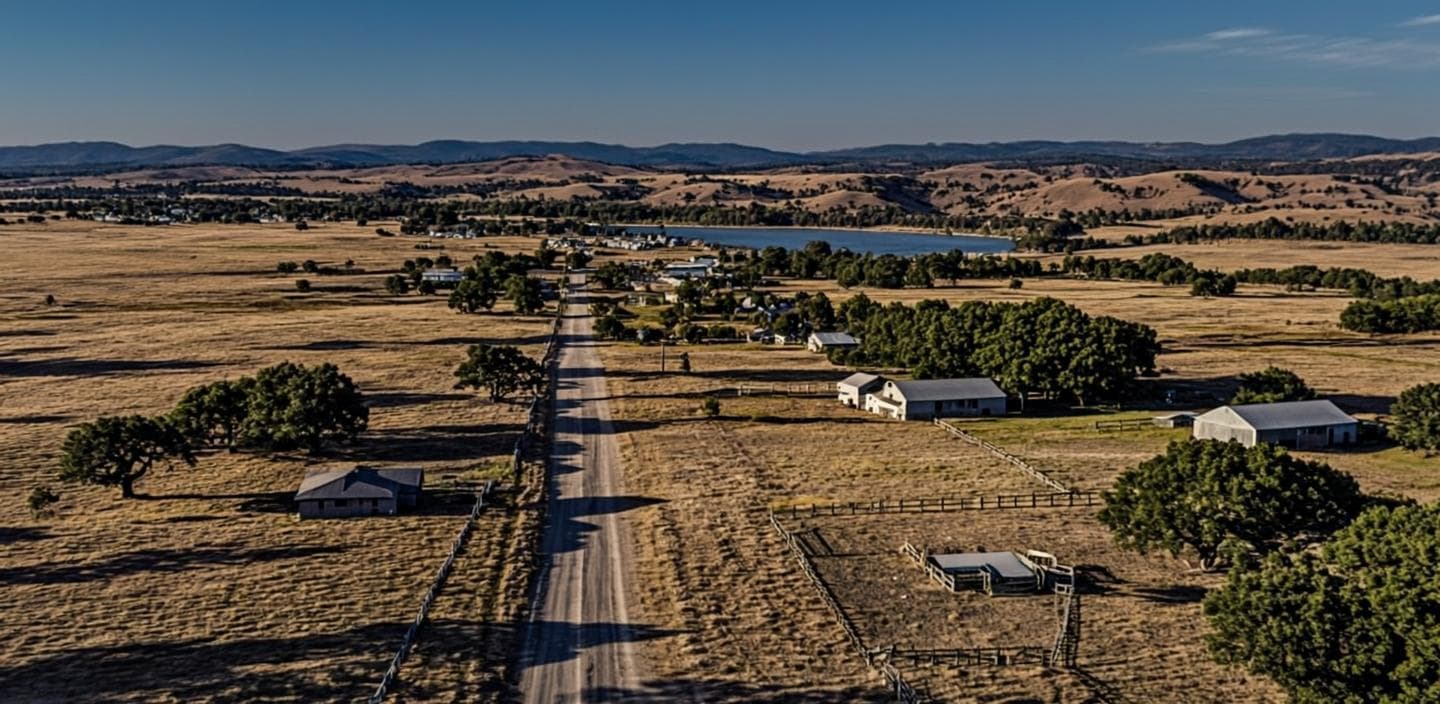
Wide-open ranch country along the SR-79 corridor in Winchester, CA at golden dusk — a long country road, oak-dotted acreage, split-rail fences and a horse paddock, with distant reservoir and new rooftops on the horizon

Winchester · Riverside County · 92596

Leak Detection in Winchester, CA

Winchester is where the valley opens up — an 1886 town core, tract streets along the highway, half-acre ranchettes and working acreage, all sharing one ZIP code with French Valley. We locate slab, well-line, service line, irrigation, sewer and gas leaks across every kind of ground, verified with instruments and documented in reports built for this land.

  • All of 92596 — town core to acreage
  • Well & ranch-line specialists
  • Same-day slots most weekdays
  • Flat rate — no trip charge

Twenty Minutes, Door to Gate

Point us up the Winchester Road (SR-79) corridor from our Temecula base and most of Winchester is inside twenty minutes — Old Town, the tract streets off Simpson Road, the ranchettes toward Lake Skinner and the acreage parcels out frontage roads. Most appointments land same-day.

Ranch, Acreage & Ag Fluency

Barns, shops, troughs, orchard valves, grove laterals, guest houses behind the main house — rural parcels here pipe water to five structures where a city lot pipes one. We map every line before we listen, and we locate leaks on runs the generalist trades would rather dig up blind.

Wells & Pressure Tanks, Read Properly

On well-fed properties the plumbing tells on itself through the pump: longer runtimes, short-cycling, a pressure tank working overtime. Our technicians read that behavior as evidence — and use it to isolate the buried run that's actually leaking before any ground is opened.

Reports Written for the Land

Every visit ends with a written locate report — verified spot, method, photos, moisture and pressure readings — formatted for EMWD bill disputes, insurance adjusters, well-service contractors and escrow. Rural or tract, if we didn't prove it, we don't call it found.

Winchester Leak Detection

Leak Detection for the Corridor's Wide-Open North End

Winchester sits at the north end of the Winchester Road (SR-79) corridor — the last stop before the road runs on toward Hemet, and the point where the Temecula Valley genuinely opens into ranch country. Settlers laid the town out in Pleasant Valley in 1886 and named it for Amy Winchester, whose family gave the ground for the depot the railroad finished in 1890; the pioneer-era Patterson House still stands as a museum from that first boom. Riverside County counts just over three thousand residents inside the census boundary, but the wider Harvest Valley/Winchester planning area keeps converting ground — most recently a commercial tract approved to become 148 new households — and the listing sites show hundreds of lots and land parcels trading hands in 92596 at any given time.

That history explains the plumbing. Inside a few square miles you can inspect a mid-century farmhouse on the old town grid, a 1990s tract home along the highway, a four-acre ranchette in Morningstar Ranch or Winchester Trails, and a twenty-acre parcel where the water starts at a well and ends at an orchard — with private wells, pressure tanks and septic systems common wherever the county roads give way to dirt shoulders. Public water for most of town comes from Eastern Municipal Water District, whose 558-square-mile territory wraps Winchester, French Valley and Homeland together; EMWD also serves more than a hundred agricultural accounts across its system, which tells you how deep the ag roots still run. And the lakes define the edges: Lake Skinner Recreation Area carries a Winchester mailing address, and the Domenigoni Parkway crossing east is the front door to Diamond Valley Lake, the largest reservoir Southern California ever built.

For a leak specialist, that mix is the job. A slab leak on a tract street, a wet stripe crossing half an acre, a well pump that won't stop cycling and a pasture line that's always mud are four different investigations — and the crew that treats them all like a city-lot service call will guess wrong on three. We work Winchester every week from our dispatch base at 33611 Blue Water Way, roughly twenty minutes straight up the SR-79 corridor, with the same rule everywhere: find the source, prove it with instruments, and put the findings in writing before anyone opens ground.

What We Hear From Winchester Neighbors

The Four Calls We Get Most in Winchester

From the tract streets off Simpson Road to the acreage out toward Lake Skinner, four scenarios fill our Winchester calendar. Each one points at a different part of the system — and each deserves instruments before anyone opens a slab, trenches a driveway or replaces a pump on spec. Any of these sound like your week?

The Warm Tile on a Tract Street

A hallway that's toasty in bare feet, a water heater that never seems to rest and an EMWD bill that stepped up a tier. On the corridor's tract homes — copper in the older subdivisions, early PEX in the newer ones — that trio almost always means a hot line leaking in the slab. Correlation and thermal imaging walk the leak to a single verified spot, so the opening is measured in inches and the report supports an insurance claim or an adjustment application with equal ease.

Slab Leak Detection & Repair — how we handle it

The Green Line Across Half an Acre

A strip of grass that's greener than everything around it, or a wet seam crossing the driveway that stays damp for days after the sprinklers run. On ranchettes and acreage, that stripe is a buried run telling on itself — and the break can sit a hundred feet from where the water surfaces. We pressure-test the full run, correlate along it acoustically and, where plastic pipe goes quiet, introduce tracer gas to mark the exact exit point before a shovel ever touches ground.

Underground Leak Detection — how we handle it

The Well Pump That Won't Rest

The pump kicks on every ten minutes with no fixtures running, the pressure tank cycles like it's training for something, and the electric bill is quietly climbing. That's a well-fed property's version of a spinning meter: water is escaping somewhere between the wellhead, the house and whatever barns or troughs share the line. We isolate each branch, test the tank and watch the pump's behavior as evidence — then pinpoint the break so the repair is one tidy excavation, not a season of exploratory trenches.

Main Water Line Leak Detection — how we handle it

The Pasture Zone That's Always Mud

One irrigation station floods a corner of the pasture while the next field browns out, or the whole system loses pressure every time a distant valve opens. Ranch and ag laterals fail at fitting joints, root crossings and saddle taps that were installed decades before the fence lines moved. Zone-by-zone pressure testing maps exactly where the water is going, and the written locate lets your irrigation tech — or our repair crew — fix one section instead of guessing through the whole run.

Irrigation & Sprinkler Leak Detection — how we handle it

Full-Service Coverage

All Eight Specialties, Across 92596

Every one of our leak specialties runs weekly across Winchester — from tract slabs and heater connections along the Winchester Road corridor to well-fed service runs, barn lines and pasture laterals on the ranchettes and acreage, with sewer, gas and commercial work in between. Each guide below goes deep on signs, methods and costs.

Know Your Ground

One ZIP Code, Four Kinds of Ground

Type 92596 into a search bar and every result blurs together — because the ZIP covers a historic town, suburban tracts, horse property and working acreage at once. Each of those grounds pipes water differently, loses water differently, and hides a leak differently. Here's how we read the map when a Winchester call comes in.

Town Core

The Old Town Grid, Est. 1886

Around the crossroads that made the town — near the depot site, the 1887 church and the Patterson House — small-lot homes from mid-century and earlier sit on mature tree lines. Expect original galvanized or early copper supply runs, sewer laterals invaded by the very roots that shade the street, and repairs where patience with old fittings matters more than speed.

Tract Streets

Tract Homes Along the Highway

Subdivisions from the 1980s through the 2020s line the Winchester Road corridor, with more arriving as county approvals convert ground — copper giving way to PEX somewhere in the middle years, slab-on-grade throughout. These homes leak like tract homes anywhere in the valley: hot lines in slabs, angle stops, heater connections and builder-era yard lines crossing their second or third decade.

Ranchettes

Half-Acre to Five-Acre Ranchettes

Morningstar Ranch, Adeline's Farm, Winchester Trails, Sweetwater Ranch and Dutch Village are the neighborhoods that give Winchester its horse-country character. One meter, many destinations: side-yard spigots, barn and shop lines, trough fills and long lateral runs under driveways — each one a suspect when pressure drops and nothing shows at the house.

Acreage & Ag

Wells, Septic & Working Ground

Out where the shoulders turn to dirt, ten-to-twenty-plus-acre parcels run on private wells, pressure tanks, septic systems and irrigation that serves pasture, groves or orchards. The evidence lives in pump behavior, tank cycling and wet ground a football field from the wellhead — locating that demands correlation gear and tracer gas, not a shovel and a hunch.

How It Works

From Gate to Report in Four Steps

Rural or tract, the rhythm never changes: understand the property, walk the system, prove the leak, document it. What changes is how much map we build first — because out here, knowing what feeds what is most of the diagnosis. Here's exactly how a Winchester visit runs.

  1. The Call That Sketches the Property

    Tell us the essentials on the phone: well or meter, how many structures share the water, what you're seeing and where. A technician — the person who'll actually run the equipment — sets your flat rate and books the earliest slot, with active leaks prioritized around the clock.

  2. Walk the Ground Together

    We start where the water starts — the meter, or the wellhead and tank — then trace every branch it feeds. You'll hear the plan out loud: which zones get isolated, which runs get tested first, and what each result will tell us before the next instrument comes out.

  3. Listen, Measure, Correlate

    Acoustic amplification where sound travels, correlation surveying across open ground, thermal imaging where heat is the tell, isolation testing to pressure-prove each branch, tracer gas where nothing else reaches. We stop when the evidence agrees on one spot — not when the guessing gets expensive.

  4. Mark It, Prove It, Write It Down

    The verified location gets flagged or painted and photographed, moisture and pressure readings go in the record, and you receive a written report — plus flat-rate repair options to approve or decline. Most visits leave the property exactly as we found it, minus the leak.

The Winchester Difference

Long Lines, Wells and Wide-Open Ground: Rural Locating Is Its Own Craft

City plumbing is a map; ranch plumbing is a distance. On a ten-acre parcel, the buried line between a wellhead and a house can run two hundred feet or more — and every one of those feet costs a little pressure before a single fixture opens. Add barns, shops, guest quarters, trough fills and orchard valves tapped off the same trunk, and one property can hold more buried line than a city block. When something leaks out here, the symptom and the source can be a pasture apart — which is exactly why the finding has to be done with instruments that measure, not machines that dig.

Water supply is the other half of the craft. Most of Winchester reads its usage on an EMWD bill, where a hidden leak walks you up the district's tiered rates and a documented locate supports a leak-adjustment request. But on the parcels at the rural edge, the meter is the pump: runtimes stretch, the pressure tank short-cycles, and the tell shows up on the electric bill instead of a water statement. Our technicians diagnose in both languages — meter and tank, district bill and pump behavior — and we've located enough well-fed systems to know which branch is lying before the ground is opened.

It's no accident that Winchester's edges sit in lake country. Lake Skinner — with its Winchester mailing address — and Diamond Valley Lake anchor the same Metropolitan Water District system that reshaped this valley, and around here everyone understands that water is infrastructure, not a given. We bring that respect to every call: mapped lines, verified locations, marked spots photographed for the record, and reports your insurer, the district or your well-service contractor can act on without a second visit.

Call Now — (951) 393-1867
  • Distance Changes the Math

    A few hundred feet of buried line costs pressure all by itself, so 'weak flow' on acreage can mean a leak a football field from the symptom. We account for run length before we diagnose — and we've watched short runs and long runs tell completely different stories from the same complaint.

  • Read the Tank Before the Ground

    On well-fed properties, the pressure tank is the lie detector: draw-down tests and pump-cycle timing point to whether water is escaping on the house side, the barn side or out along the main run — narrowing the search before a single instrument hits the dirt.

  • Correlation Across Open Ground

    Sensor pairs log leak noise at both ends of a suspect run and measure the time difference to compute a position — the method that finds breaks under pastures, roads and orchard rows where a listening rod alone can't reach.

  • Tracer Gas Where Sound Can't Travel

    Plastic service lines muffle leak noise, and some ground simply doesn't carry it. Pressurized tracer gas percolates to the surface at the exact break — under a driveway, a paddock or a planted field — and a gas sniffer marks the spot clean.

  • One Map, Every Structure

    House, barn, shop, trough, spigots, grove valves — we map what feeds what before we listen, so the leak gets attributed to the right line and the repair conversation happens once, not three times.

  • Paperwork Written for the Land

    Well logs, ag laterals, multi-structure layouts and district paperwork all end up in the same place: a written report with the verified spot, the method and the cause — usable for an EMWD adjustment, an insurance claim or a contractor who's never seen the property.

Straight Pricing

What Leak Detection Costs in Winchester

The miles up the corridor never become a line item. Winchester addresses pay the same flat rates as every community we serve — quoted on the phone before we roll, and the number doesn't move mid-job.

Detection Visit — House, Yard & Slab

$150–$450

Flat rate, quoted upfront

The band where most Winchester homes land: acoustic, thermal and pressure testing across the house, the yard lines and the slab, on tract streets and small-lot cores alike. More than one suspect system? That's priced before we start, and the detection fee comes off the repair invoice when we do the fix.

Long Runs, Wells & Multi-Structure Locating

$250–$650

By property size, quoted upfront

Acreage takes more map: multiple structures, longer buried runs, tank and pump testing, and correlation or tracer-gas work across open ground. We quote the whole property before the truck rolls — you'll never discover the 'acreage surcharge' on the invoice, because there isn't one.

Irrigation, Ranch & Ag-Line Audits

Per zone, quoted upfront

Zone-by-zone, credited to repair

Pasture, grove and landscape systems are audited station by station, so the locate says exactly which lateral failed and where. The findings double as a scope for your irrigation contractor — or for our repair crew — and the detection fee is credited when we perform the work.

Metered or well — two ways a leak announces itself

On EMWD service, a hidden leak walks your household up the district's tiered rates, and a documented locate supports the adjustment request that can claw part of the bill back — our written report is built to satisfy exactly that paperwork. On a well-fed parcel, there's no district statement to spike: the evidence is the pump running longer, the pressure tank cycling more often and the electric bill drifting upward month after month. We diagnose in both currencies. Whether your proof lives on an EMWD statement or in a pump's behavior, the locate report states where the leak was verified, how it was proven and what caused it — and if the culprit turns out to be a sewer or septic-side issue instead of supply, the same findings redirect to the right contractor without being paid for twice.

Get your flat-rate quote

Proudly Local

Winchester Coverage — And the Whole Temecula Valley

Winchester anchors the north end of our map, tied to everything south of it by the Winchester Road (SR-79) corridor — French Valley first, then Murrieta, Wildomar and Menifee, with Temecula and its neighborhoods at the center. One team covers all ten areas we serve with the same equipment, the same flat rates and the same written-report standard, from the town core to the Lake Skinner back roads.

Dispatching up Winchester Road (SR-79) daily — Old Town core to the Lake Skinner back roads

Also serving: Paseo del Sol, Vail Ranch, Morgan Hill, Temecula Creek, Chardonnay Hills, Crowne Hill, Old Town Temecula, Temecula Wine Country, De Luz, La Cresta, Lake Elsinore, Canyon Lake, Temescal Valley and more. Not on the list? Call (951) 393-1867 — if you're nearby, we'll find a way to help.

Other Areas We Serve

Winchester FAQs

Questions? Let's clear things up.

Straight answers about leak detection in Winchester — the shared 92596 ZIP, wells and pressure tanks, EMWD bill spikes, ranch-line investigations, the drive up the SR-79 corridor and what happens on an acreage visit.

Have a different question?

Describe what you're noticing — a technician will walk you through it.

Ask Our Team

All of it: the old town grid, the tract streets along the highway, the ranchette neighborhoods — Morningstar Ranch, Adeline's Farm, Winchester Trails, Sweetwater Ranch, Dutch Village — and the ten-to-twenty-acre parcels out toward the Lake Skinner Recreation Area and along Domenigoni Parkway. We're about twenty minutes up the SR-79 corridor from our Temecula base, most bookings land same-day, and the flat rate is set on the phone before we roll — acreage included.

Winchester's Slab, Well-Line & Ranch Specialists

Leaking in Winchester? We're Twenty Minutes Up the Road.

Skip the call centers and the guesswork. One conversation sets your flat rate and holds the earliest slot — then we map the property, locate and prove the leak, and hand you a written report before you commit to any repair. From the old town core to the acreage edge, that's how we've earned Winchester's trust, property by property.

Call Now(951) 393-1867