Serving Temecula & Nearby Communities

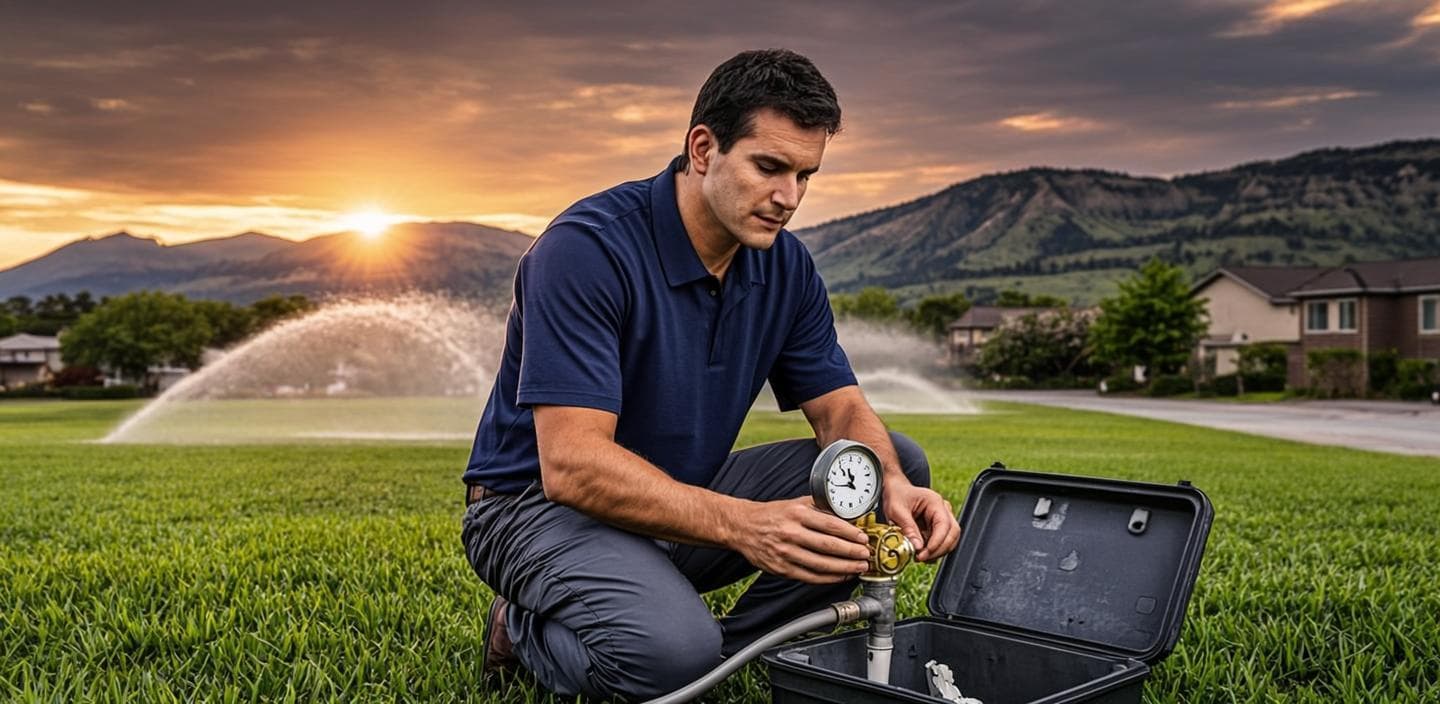
Leak detection specialist kneeling beside an open irrigation valve box with a pressure gauge on a dewy Temecula, CA lawn at dawn

Zones · Valves · Laterals · Drip — Temecula, CA

Irrigation & Sprinkler Leak Detection in Temecula, CA

A soggy strip that returns with every watering cycle, a zone that lost its punch, heads that mist instead of spray, a bill that steps up the moment watering season starts — those are the signatures of a sprinkler system leaking in the laterals, at a valve, or straight out of a cracked head. We test your system zone by zone with gauges on the line, trace the leak acoustically without digging up the yard, and hand you the gallon math — so the repair targets the exact failure instead of swapping parts until the symptoms fade.

  • Zone-by-Zone Pressure Testing
  • Gallon-Waste Math Included
  • Licensed, Bonded & Insured

Cycle-Timed Diagnosis

Irrigation leaks are intermittent — laterals only hold pressure while a zone runs. We test during live cycles and against closed valves, so intermittent symptoms get caught instead of dismissed as 'couldn't reproduce it.'

Gallons & Dollars, Quantified

Every audit converts findings into real numbers: estimated gallons lost per month and what that costs on tiered rates — so the repair decision is business math, not a vibe.

HOA & Community-Ready

Common-area irrigation loops, shared meters and board approvals are routine for us. Written zone results, water-waste audits and documentation formatted for property managers and associations.

Repaired Means Pressure-Proven

A fix isn't finished until the zone re-tests clean: pressure holds, heads hit design spray, and the schedule matches the landscape. You get the before-and-after readings.

The Irrigation Specialist

What Is Irrigation & Sprinkler Leak Detection?

Irrigation leak detection is the diagnostic specialty for the system that waters your yard — everything downstream of the backflow device: the mainline feeding your valve boxes, the zone valves themselves, the web of buried laterals feeding each head, and the drip lines in your beds. It's a different animal from both the always-pressurized supply lines on our slab and water line pages and the gravity drains on our sewer page. A sprinkler system is pressurized part-time: the mainline holds city pressure around the clock, but each lateral only sees pressure during its zone's few minutes in the cycle. That part-time profile is exactly why irrigation leaks are intermittent, why they so often get misdiagnosed, and why a leak that runs for months can still leave no obvious puddle.

A proper irrigation investigation answers four questions with measurements: is the system even the leak source (the controller-off meter test), which zone is failing (zone-by-zone isolation with pressure gauges), where along the lateral is the break (acoustic tracing and wet-spot mapping), and how much water is it costing you (gallon math tied to your schedule and bill). Most sprinkler repair outfits answer none of the four — they replace the head that looks guilty, leave, and get called back when the next zone starts weeping. We find the failing component, mark its position, quantify the waste, and verify the repair holds pressure before we call it done.

Temecula runs one of the most irrigation-intensive landscapes in Southern California, and that makes this work genuinely local. Our Mediterranean climate means yards water year-round; district rules push watering into the 3 a.m. window where nobody hears a lateral hissing underground; tiered rates mean every wasted gallon bills at your most expensive tier; and the valley's housing mix — HOA communities like Paloma del Sol and Redhawk with common-area loops, big landscaped Wolf Creek lots, builder-grade systems in fast-built French Valley, and grove lines out toward Fallbrook — creates leak patterns a generic sprinkler guy almost never sees twice in the same year.

Irrigation or Something Else?

Is the Leak Really in the Sprinkler System?

A wet yard and a scary bill send homeowners chasing the wrong pipe all the time — sprinkler parts get swapped while the supply line keeps leaking, or a week is spent watching the irrigation system when the real culprit is under the house. The split comes down to a physics fact most people never hear: your irrigation laterals only carry water during their zone's cycle, while your supply lines are pressurized every second of every day. That difference shows up on your water meter, and it settles the question in about fifteen minutes.

Points at the Irrigation System

  • The meter's low-flow indicator sits still all day — then starts ticking the moment a zone runs.
  • Wet patches follow a spray pattern or trace a lateral run, and dry out between watering days.
  • The bill steps up as watering season starts and steps back down when the system is shut off.
  • One zone sprays weak or misses heads while the rest of the system behaves normally.
  • A valve box stays damp between cycles, drips after shutoff, or hisses with the controller off.
Get the zone-by-zone audit

Points at Supply, Sewer or the Service Line

  • The meter creeps 24/7 with the controller unplugged — that's a supply-side leak, not a zone.
  • A wet spot grows every day whether you water or not, especially on the run between meter and house.
  • Sewer odors, gurgling drains or fixture backups — that's the drain side, not the sprinklers.
  • Warm spots on the floor or a water heater that never rests — the classic hot-line slab leak signature.
  • Soggy ground out at the street or beyond your property line — the meter, the service line or a neighbor's run.
Explore the other services

The tell: Turn the controller off, run no water anywhere, and watch the meter's low-flow indicator for 15 minutes. Still meter with a wet yard points at irrigation or nothing at all; a creeping meter points at supply. Then run one zone at a time and re-check between each — the zone that moves the needle with its heads shut off is your culprit. Can't get a clean reading, or the meter dances either way? That's exactly what our zone-by-zone pressure test settles with gauges on every line before anyone opens a trench.

Know Your System

Where Sprinkler Systems Actually Leak — the 5 Pressure Zones

Irrigation failures aren't random — they cluster in five zones, each with its own leak personality. Knowing which zone you're dealing with explains the symptoms you're seeing, predicts what the repair will look like, and keeps a $150 fix from being upsold into a $3,000 re-pipe. When you call, this is the map we work from.

The Backflow Device (PVB)

The brass assembly above ground near the house that keeps irrigation water from siphoning back into your drinking supply. It cracks in the valley's rare freezes, weeps through relief ports when internal check valves wear, and gets blamed for 'sprinkler leaks' it isn't causing. A weeping PVB drips 24/7 — which is why it shows up as constant meter movement, not cycle-timed wet spots.

Mainline & Master Valve

The constant-pressure backbone running from the PVB out to every valve box. Because it's pressurized around the clock, a mainline leak moves the meter 24/7 — this is the irrigation leak that actually triggers district leak alerts. Cracks come from soil movement, construction damage and fitting failures, and the master valve's seals wear like any other valve in the system.

Zone Valves & Valve Boxes

The buried valves that open one zone at a time. Diaphragms stiffen with age and hard-water scale, debris holds them cracked open, solenoids and wiring fail. A stuck valve is the reason one zone leaks water out of its lowest head after shutoff — or runs quietly underground at 3 a.m., inside the watering window where nobody is awake to hear it.

Laterals — the Buried Web

The network of smaller pipes feeding each head in a zone. Polyethylene goes UV-brittle at exposed risers, PVC joints crack when expansive clay flexes the ground, roots squeeze fittings from every direction, and builder-grade installations settle sheared lines in fast-built subdivisions. Lateral leaks show as wet runs and weak zones — only during cycles.

Heads, Nozzles & Drip Lines

The visible end of the system — and the most misdiagnosed. Mower strikes crack head bodies, sunken heads flood their own collar each cycle, mismatched nozzles mimic leaks with runoff, and drip lines crack where landscaping tools, rodents and sun exposure work them over. Head-level symptoms are real leaks about half the time — the other half, they're symptoms of a zone problem upstream.

Sprinkler Symptoms

8 Signs Your Irrigation System Is Leaking Underground

Sprinkler leaks rarely announce themselves with a geyser — they whisper through cycles, wet strips and bill steps that are easy to blame on the weather or 'just summer rates.' Any one of these signs is worth a pressure test; two or more together is a system telling you exactly which zone hurts. Every one of them can be confirmed without tearing up the yard first.

A Wet Strip That Returns With Every Cycle

One patch of lawn re-wets every watering day and dries between them, greener and spongier than anything around it. A broken lateral feeds the soil on schedule — your plants just show you the receipt. When the wet zone traces a straight line between heads, you're literally looking at the pipe route.

The Bill That Climbs With Watering Season

Your usage mirrors the irrigation calendar: steps up as watering season starts, climbs again when you add days, drops when the controller is off. Seasonal upticks are normal; a leap that outgrows your schedule isn't. Tiered rates make it worse — leak gallons stack onto the most expensive tier, so the bill outruns the gallons.

A Zone That Won't Pop Up or Lost Its Punch

Heads that barely rise, drool instead of spray, or retreat before the cycle ends are starving for pressure — and underground leaks drink first. The break doesn't have to be near the weak heads; a split halfway down the lateral robs pressure from every head downstream of it.

Heads That Mist & Fog Instead of Spray

A foggy, atomized spray looks dramatic but wastes shocking amounts of water to wind and evaporation — and it signals pressure above nozzle design. Chronically over-pressurized systems stress every fitting and valve seal in the loop, which is why misting zones so often graduate into joint leaks a season later.

A Damp, Dripping or Hissing Valve Box

Lift a lid and find standing water, a trickle you can hear, or a hiss with the system off — the valve box is the confession booth of irrigation leaks. Stuck diaphragms weep out of the zone's lowest head; cracked fittings inside the box saturate the gravel bed and tunnel water along the pipe trench.

Sunken Heads, Sinking Soil & Washed-Out Beds

A head sitting below grade, a shallow dip forming along a pipe run, mulch washing out of a bed after every cycle — leaking water carries soil away first. Sunken heads then get clipped by mowers, which turns one leak into a row of broken heads and a re-grading project.

Water Creeping Across Walkways After Cycles

Puddles on the sidewalk or a damp driveway edge an hour after the system shuts down aren't just 'head overlap' — persistent post-cycle seepage means water is still escaping somewhere it shouldn't. It's also the fastest route to a water-waste complaint: pavement runoff is exactly what neighbors report and ordinances prohibit.

Mushrooms, Fungus Rings & Permanently Squishy Turf

Fairy rings of mushrooms, slimy patches and turf that squelches days after its last watering day all point to soil that's staying saturated between cycles. Overwatering schedules cause it too — but when it follows one zone instead of the whole yard, the schedule isn't the problem; the pipe under it is.

Our Services

Every Leak Detection Service We Offer

Irrigation is one branch of the same specialty. The same licensed Temecula team, the same evidence-first approach and the same flat-rate, measurement-backed reporting cover every service below — so whether the leak turns out to be in the sprinklers, the supply, the slab or the sewer, the next step is already in familiar hands.

Slab Leak Detection & Repair

Pinpoint hot spots, damp floors & the sound of running water under your foundation.

  • Electronic & acoustic under-slab pinpointing
  • Hot-spot thermal mapping for hot water slab leaks
  • Repair vs. reroute options with upfront pricing
Get Leak Help

Main Water Line Leak Detection

Find leaks between your water meter and your home before they undermine driveways.

  • Meter-to-home line pressure testing
  • Leak verification with meter isolation tests
  • Documentation for your water district & insurer
Get Leak Help

Underground Leak Detection

Sonic, tracer-gas & pressure testing to locate buried pipe leaks without digging.

  • Ground microphone & leak correlation surveys
  • Safe tracer-gas pinpointing under hardscape
  • Surgical, minimal-dig verification
Get Leak Help

Emergency Leak Detection

24/7 rapid response when a leak is flooding your home or flooding your yard.

  • 24/7 live emergency dispatch
  • Priority response for active flooding
  • Fast locating so repairs start sooner
Get Leak Help

Sewer Line Leak Detection

Camera inspections & hydrostatic testing that reveal breaks, roots & bellies.

  • HD sewer camera inspection with locator
  • Hydrostatic & isolation testing under slabs
  • Video documentation of every finding
Get Leak Help

Commercial Leak Detection

Restaurants, retail, offices & multi-unit properties across the Temecula Valley.

  • Restaurants, retail, offices & HOAs
  • After-hours & low-disruption scheduling
  • Reports formatted for insurers & managers
Get Leak Help

Gas Line Leak Detection

Safety-first combustible gas detection for your home, yard & appliances.

  • Combustible gas detector surveys
  • Pressure testing for yard & house lines
  • Clear findings for licensed gas repair
Get Leak Help

Not sure which service fits your situation? Describe the symptoms when you call (951) 393-1867 — we'll dispatch the right detection method. Or explore all 8 services in detail.

Why Systems Fail

What Cracks, Clogs and Drains Sprinkler Systems in Temecula?

Irrigation systems fail for a short list of reasons, and most of them are written into the system's age, its exposure and the ground around it. Knowing which failure you have is the difference between a $150 head fix and a correctly scoped zone repair — and every cause below leaves a fingerprint we can test for. These are the six we find most on Temecula Valley properties.

UV-Baked Poly Laterals & Sun-Fried Fittings

Inland Empire sun is brutal on anything polyethylene — exposed risers and shallow-buried laterals go brittle over years, then crack at flex points and fitting transitions. It's why the same riser snaps every spring and why 'just replace the head' stops working once the fitting below it is sun-weakened too.

Mower Strikes & Sunken Heads

Heads settle below grade as soil compacts and basins erode, putting them exactly at mower-blade and trimmer-line height. Each strike cracks a body or loosens a fitting; each cycle then washes the basin deeper. Left alone, one sunken head becomes a row of broken ones and a landscape repair on top of the plumbing.

Stuck Valves & Worn Diaphragms

Temecula's hard water scales diaphragms and seats, debris from mainline work lodges where it shouldn't, and solenoids weaken with age. The result is the classic 'my system leaks when it's off' complaint — a valve that never fully closes, weeping out of the zone's lowest head or running the zone underground during the 3 a.m. watering window nobody hears.

Clay-Soil Movement & PVC Joint Failures

Expansive valley clay swells with irrigation and rain, then shrinks hard through dry spells — flexing rigid PVC joints cycle after cycle until one snaps. Fast-built subdivisions add settling backfill that shears lines in the first few years. The break usually hides mid-run, which is why the wet spot rarely sits where the symptoms show.

Root Intrusion Into Laterals & Drip Lines

The same root pressure that invades sewer laterals works irrigation too: trees and shrubs wrap around drip lines, puncture emitters and squeeze fittings until they split. Roots are opportunists — they colonize the moisture a small leak creates first, which is why a 'minor' wet patch often means the surrounding roots have already made it permanent.

Overpressure, Water Hammer & PVB Faults

City pressure in many valley neighborhoods runs above what spray nozzles are designed for — the misting, fogging, fitting-stressing pressure that shortens the life of every component downstream. Add water hammer from fast-closing valves and aging PVB seals that weep constantly, and the whole system quietly works itself toward failure between seasons.

How We Investigate

5 Ways We Find Irrigation Leaks — Without Guesswork or Trenches

An irrigation diagnosis should end with you knowing four things: whether the system is the leak source, which zone fails, where along the line, and what the waste is costing you. Every method below feeds one of those answers, and together they let us hand you marked positions and gallon math instead of a parts-swapping hunch. All of it happens before anyone lifts a shovel.

  1. Static Meter & Controller-Off Testing

    We start by unplugging the irrigation clock and watching your meter's low-flow indicator with everything else off. A still meter clears the supply side; a moving one redirects the investigation to the service line. Then we run each zone and re-check between cycles — the reading that changes with one zone is reading the truth about that zone.

  2. Zone-by-Zone Isolation & Pressure Testing

    Each zone runs solo with pressure gauges on the line, and results get compared against design specs for the heads on it. Zones that lose pressure, over-pressure into misting, or bleed down after shutoff get flagged. This is the test that turns 'something's wrong with my sprinklers' into 'zone 4 fails at the second lateral.'

  3. Acoustic Listening at Heads, Risers & Boxes

    Ground microphones and contact mics trace the hiss of pressurized water escaping buried laterals — under turf, along bed edges, even beneath walkways. On cycle, the leak site announces itself; between cycles, stuck valves and weeping fittings give themselves away. The result is a marked spot, measured in feet from the valve box.

  4. Controller, Schedule & Flow-Data Review

    We read the controller the way an auditor reads books: run-times against plant needs, zones stacked on the wrong days, builder defaults nobody ever changed, and seasonal adjust left at 100% through winter. Pairing schedule data with your meter readings separates true leaks from simple overwatering — and quantifies both in gallons per month.

  5. Wet-Spot Mapping & Soil-Probe Tracing

    Moisture patterns across cycles get mapped — which patches re-wet, how fast, in what shape — and a soil probe walks the suspected lateral runs to feel saturation the surface doesn't show yet. The convergence of probe readings and acoustic hits is where we set the flag for the repair dig: one small, confident opening instead of an exploratory trench.

Your Options, In Order of Damage

Sprinkler Repair Options, Explained Honestly

Not every leaky system needs a re-pipe, and not every 'fine' system survives another summer on cracked fittings. The audit results put you in one of four lanes, each with an honest 'best for.' We quote every applicable path flat-rate, in writing — and we'll tell you plainly when a $150 part is the right answer, and when it's a $2,500 zone problem wearing a $150 disguise.

Head, Nozzle & Riser Correction

Best for: Broken, sunken or mismatched heads on a system that tests pressure-sound.

Cracked bodies get replaced, sunken heads get raised to grade with proper risers, and misting zones get pressure-matched nozzles that stop the fog and the waste. Alignment gets re-checked zone-wide so the repair doesn't just stop a leak — it fixes the spray pattern that was quietly drowning one bed and starving another.

Valve Rebuild & Replacement

Best for: Zones that leak when off, won't shut down, or hiss at the box.

Stuck zones get their valves rebuilt — diaphragm kits, seat cleaning, debris flushing — or replaced outright when the body is scored, with solenoids and wiring verified at the same visit. If your system has no master valve, this is also where we'll show you what adding one buys: the whole mainline stops being pressurized between cycles, which contains the next mainline failure instead of feeding it.

Lateral Spot Repair & Reroutes

Best for: One failed run on a zone that tests sound everywhere else.

The marked leak gets one small excavation, the failed section is cut out, and new poly or PVC is coupled in — with sleeves wherever the run passes under walks or drives. Because the audit marked the position first, the dig is measured in feet, not hours of exploratory trenching across a finished yard. Turf goes back the same visit in most cases.

Zone Re-Pipes, Drip Conversions & Pressure Control

Best for: Brittle multi-failure laterals, chronic overpressure or thirsty spray zones.

When one zone fails in several places, re-piping it beats chasing cracks for years — new poly or PVC run head to head, on the zone's own valve. Over-pressured systems get regulation at the PVB; thirsty spray areas convert to drip with matched emitters; and a WaterSense smart controller ties it together, adjusting for weather and earning rebate dollars in the process.

Costs, Honestly

What Does Irrigation Leak Detection and Repair Cost in Temecula?

Sprinkler pricing depends mostly on where the failure sits: a head is a parts-counter fix, a valve is an hour's work, and a re-piped zone is a real project. National and regional data frames the bands — head replacements commonly run $65–$250, valve repairs $75–$400, and most in-ground repairs land between $100 and $490 before access and restoration are counted. Here's how ours lands, flat-rate and in writing.

Irrigation Inspection & Audit

$150–$450

Flat rate — audit included

Our irrigation audit runs in the same flat band as all our detection work: zone-by-zone testing, marked leak positions, pressure readings and gallon math, with repair options quoted in writing during the visit. The fee is credited toward any repair we perform.

Heads, Valves & Spot Repairs

≈$150–$800

Most common repairs

Head and nozzle work sits at the lower end; valve rebuilds and replacements run mid-band; marked lateral spot repairs complete the range. Because the audit pinpoints the failure first, you pay for one confident repair — not a season of return visits swapping parts on a guess.

Zone Re-Pipe or Drip Conversion

≈$1,500–$4,500

Per zone, by access & plantings

Full zone re-pipes, spray-to-drip conversions and pressure-regulation packages are quoted per zone from the audit map — access, hardscape crossings and planting density set the number. HOA common-area loops are quoted by the map with documentation formatted for board approval.

Who Pays: You, Your HOA, Insurance & the District

Irrigation money questions start with the property line. The system downstream of your backflow device — laterals, valves, heads — is the homeowner's responsibility, while common-area irrigation loops in HOA communities like Paloma del Sol, Redhawk and Harveston belong to the association; if a shared loop is the problem, our written zone results and marked positions give your board and property manager what they need to approve the repair. Insurance rarely enters an outdoor irrigation claim — carriers treat the system as landscape maintenance, and a lawn wet spot isn't the kind of sudden discharge policies were built for — but documentation still matters for district programs. Rancho Water accepts leak adjustment requests for documented, repaired leaks: the repair invoice, the findings and the timeline are what the form lives or dies on, and the window is limited, so it pays to file promptly after the fix. Two more levers worth pulling: SoCal Water$mart rebates start at $80 per WaterSense smart controller plus $35 per active station, and weather-based controllers earn exemption from fixed watering-day windows under district rules — which matters every time drought stages tighten.

Get the documentation that supports your adjustment

The Escalation Timeline

What a Sprinkler Leak Costs While You 'Wait and See'

Irrigation leaks don't explode like a burst supply line — they compound on a schedule measured in watering cycles, which is exactly why they're so easy to postpone. Here's the progression we watch play out on valley properties when audit findings get shelved for 'after summer.' The ending is always the same: the leak keeps its appointment; the schedule slips.

Every cycle: the meter quietly logs it

A dime-scale leak adds roughly 6,300 gallons a month; a cracked lateral or stuck valve can double that. Tiered billing prices most of it at your top rate, so the surcharge shows up as $40–$150+ a month, every month, with nothing visible to show for it.

Weeks: the yard starts telling on you

Soil erodes along the failed run, heads sink into their own basins, mulch migrates onto the sidewalk and pavement stays damp after cycles. This is also when water-waste exposure begins — visible runoff is what neighbors report and what district ordinances prohibit.

Months: the landscape splits in two

The zone that owns the leak drowns its plantings — fungus, root rot, mushy turf — while everything downstream of the pressure loss browns out. A builder-installed landscape worth thousands starts dying from both ends at once, and replacing it costs more than the pipe repair ever did.

The windows close: adjustments & drought stages

District leak adjustments cover limited recent billing cycles — wait too long and the gallons you wasted stay your gallons. Meanwhile drought stages tighten watering rules, and a system that already leaks becomes a system that draws notices. The audit you schedule today is the cheapest thing on this timeline.

Why Temecula Calls Us

Irrigation Diagnosis Measured in Gallons, Not Guesses

The sprinkler industry's default is the parts cannon: swap the head, replace the valve, see if the symptom goes away — and charge for each experiment. We run the opposite discipline: test the system zone by zone with gauges, prove which zone fails, locate the break before any digging, quantify the waste in gallons and dollars, and verify the repair under pressure before we pack up. When we say zone 4 is losing water at the second lateral, you'll have the readings, the marked spot and the math — and when the repair is done, the same gauges come back out to prove the zone holds. That's also why our quotes hold: they're built from measurements, not from what the trench turned up after the price was agreed.

The local edge is real, too. We work Rancho Water's service area every day, so we know the watering windows that hide 3 a.m. leaks, the tier structure that multiplies every wasted gallon, the HOA communities with common-area loops and board approval chains, the big Wolf Creek and Winchester lots with long lateral runs, the builder-grade systems going in across French Valley, and the grove lines out toward Fallbrook that run on their own schedules. That map of the valley's irrigation is why our first audit usually finds what a season of parts-swapping missed.

Call Now — (951) 393-1867
  • Every zone tested & graded — pass or fail, in writing

  • Gallon-waste math tied to your actual bill & schedule

  • Repairs verified: zones re-tested under pressure

  • HOA & property-manager documentation available

Related Services

From Diagnosis to Done — Services That Finish the Job

Irrigation findings often connect to the rest of the property's water story: the service line feeding the PVB, the buried runs crossing the yard, the emergency that can't wait for morning. These are the sibling services that pair most often with an irrigation diagnosis — same team, same evidence-first approach, same reporting.

Valley-Wide Coverage

Irrigation Leak Detection Across the Temecula Valley

From HOA common-area loops in Paloma del Sol to grove lines in Fallbrook, we test, locate and repair irrigation systems across the whole valley every week — on your watering schedule, in the early windows when your system actually runs. Our crews know the districts, the soil and the builder patterns on your street, which is why the audit lands the first time.

Irrigation audit coverage across the Temecula Valley

Also serving: Paseo del Sol, Vail Ranch, Morgan Hill, Temecula Creek, Chardonnay Hills, Crowne Hill, Old Town Temecula, Temecula Wine Country, De Luz, La Cresta, Lake Elsinore, Canyon Lake, Temescal Valley and more. Not on the list? Call (951) 393-1867 — if you're nearby, we'll find a way to help.

Irrigation FAQs

Questions? Let's clear things up.

Straight answers about sprinkler systems in Temecula — bill spikes, zones that leak when off, misting heads, HOA versus homeowner responsibility and Rancho Water adjustments.

Have a different question?

Describe the sprinkler symptoms — a technician will walk you through it.

Ask Our Team

Start with the meter, not the sprinkler parts aisle. Turn the controller off, don't run any water for 15 minutes, and watch the low-flow indicator: a still meter with a spiking bill points at irrigation-cycle waste or seasonal overwatering, while a creeping meter points at a supply-side leak that needs attention immediately. If the meter only moves when zones run, the spike is irrigation — either a leak or a schedule that quietly grew. Our audit separates the two in one visit: zone-by-zone pressure results tell you which zone leaks, and the controller review tells you how much of the bill is schedule versus damage. Under tiered rates, both matter — leak gallons and overwatering gallons both stack onto your most expensive tier.

Misting Heads, Wet Strips, Bill Spikes?

Get Your Zones Tested — Before the Next Cycle Wastes Another Drop.

One call books a zone-by-zone irrigation audit with pressure testing, acoustic locating and gallon math you can act on. We'll show you which zone fails, where the water goes, and quote every honest option flat-rate — before anything is dug.

Call Now(951) 393-1867